
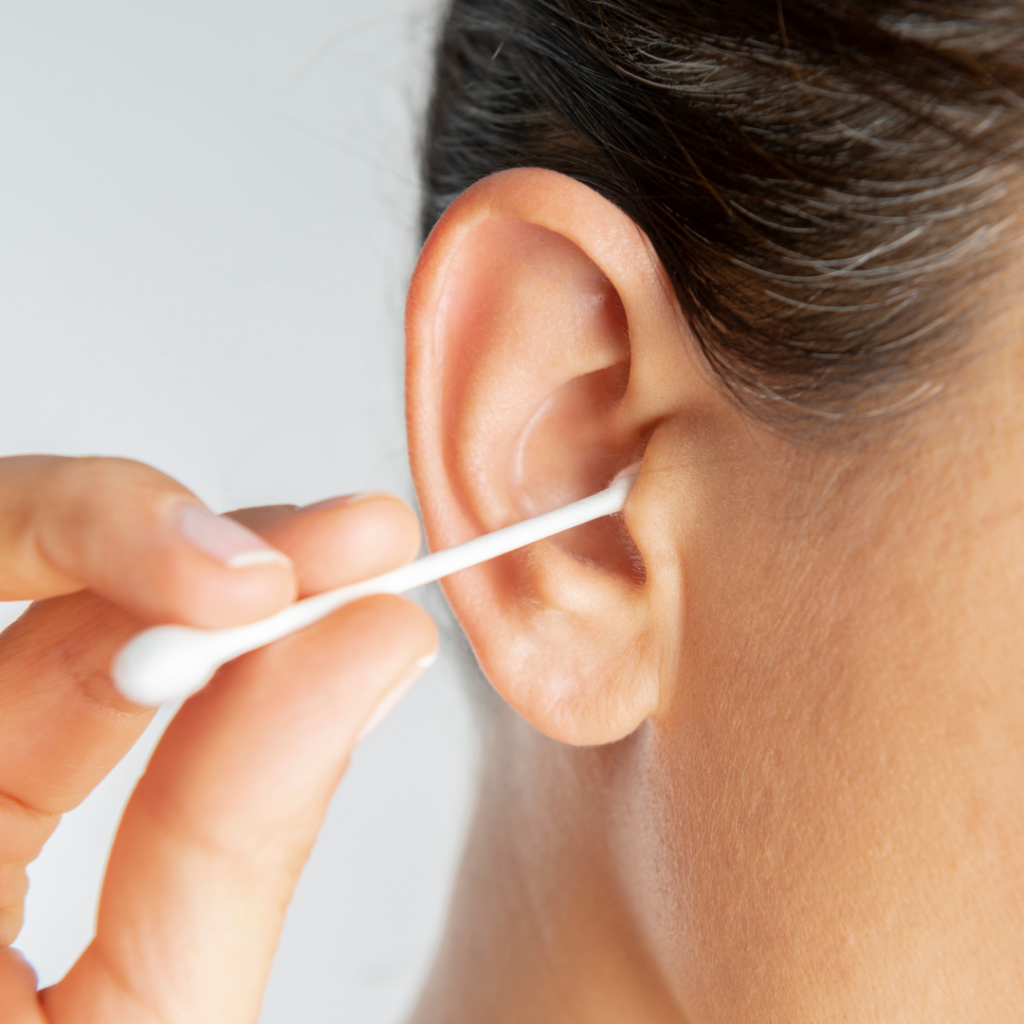
Although cotton swabs appear to offer an easy hygiene solution, pushing them into the ear canal often worsens wax accumulation and risks tissue trauma. We can determine whether earwax actually needs removal and recommend a method suited to your ear health. Most ears do not mandate routine physical scrubbing; yet, if accumulation occurs, we guide patients through safe cerumen management.
Why Cotton Swabs Create Complications Inside the Ear
Clinically speaking, earwax, or cerumen, should never be regarded as dirt or debris. It traps dust and debris, helps limit bacterial growth, lubricates the ear canal, and protects its sensitive skin. Jaw movement and normal skin migration gradually carry old wax toward the ear opening, where it flakes away or washes off during bathing.
A Q-Tip placed inside the canal can disrupt this self-cleaning process. Although the cotton may collect a small amount of wax, it often pushes the remaining material closer to the eardrum. Ongoing cotton swab use regularly condenses wax into a solid obstruction, causing a congested feeling that drives repetitive cleaning attempts.
While cotton swabs are acceptable for cleansing the external folds of the pinna, they must never pass into the ear canal.
How Can Ears Get Damaged from Q-Tip Use?
The sensitive skin protecting the ear canal exhibits extreme thinness and scratches effortlessly. Small abrasions can cause pain or bleeding and create an opening for bacteria, increasing the risk of an outer-ear infection. A cotton tip may also detach and remain inside the canal.
Swab-related clinical injuries include:
- Severe earwax impaction near the tympanic membrane
- Skin abrasions, tissue swelling, severe irritation, and active bleeding
- Infection of the ear canal
- Foreign matter or cotton material lodged in the ear
- Structural tears or perforations across the eardrum
- Mechanical trauma to the middle-ear ossicles behind the eardrum
- Transient hearing reduction or permanent sensorineural loss
- Tinnitus, dizziness, or severe ear pain
Though critical trauma is uncommon, an unexpected collision, a sudden slip, or overzealous penetration can cause extensive ear injury.
Clinical Guidelines on Earwax Removal Frequency
For the average individual, scheduled cerumen removal is completely unnecessary. Normal anatomical mechanisms steadily push cerumen toward the exterior, where regular washing rinses the visible concha. Overcleaning can dry or irritate the canal and may increase the likelihood of infection or impaction.
Clinical clearing is warranted if cerumen occludes the auditory pathway, prevents diagnostic evaluation of the eardrum, affects a hearing aid, or sparks discomfort.
Clinical Guidance for Safe At-Home Cerumen Care
If earwax produces no discomfort or auditory decline, leaving it undisturbed is consistently the safest choice. Gently wipe the outer ear surface with a damp washcloth and allow internal self-cleaning mechanisms to work.
When dry wax demands pre-treatment, we often advise using an OTC cerumenolytic solution or drops composed of glycerin, mineral oil, carbamide peroxide, or saline. Follow the package directions meticulously regarding droplet quantity and consecutive days of use. Discontinue administration immediately if the solution sparks pain, severe dizziness, skin rash, or worsening ear fullness.
At-home ear irrigation is not universally safe and requires clinical clearance and technique demonstration from an audiology professional beforehand. Never use a dental water jet. Refrain from using ear candles, rigid metal picks, DIY camera probes, hairpins, or commercial home suction kits. These questionable products can burn sensitive tissues, lacerate the canal, rupture the eardrum, or compact wax deeper.
When to Seek Audiological Care for Cerumen Impaction
Arrange a consultation when aural fullness continues after drop therapy, wax is severely impacted, or home interventions prove ineffective. Expert removal is the safest path for patients who struggle to hold still, individuals with narrow ear canals, hearing aid wearers, or those with surgical contraindications to irrigation.
Seek an examination for:
- Severe ear pain, intractable itching, or outer ear tenderness
- Visible blood, purulent discharge, clear fluid drainage, or offensive ear odors
- Pyrexia or localized tissue swelling surrounding the ear canal
- The rapid emergence of tinnitus or episodic dizziness
- Acute sensorineural hearing loss or auditory decline persisting after cerumen extraction
- A possible eardrum perforation or cotton fragment trapped inside
- Frequent wax buildup that occludes or damages hearing aids
You should always treat sudden unilateral hearing loss as an urgent medical emergency instead of assuming simple cerumen occlusion. Immediate assessment allows clinicians to differentiate an external canal obstruction from an urgent inner-ear pathology.
How Healthcare Providers Extract Impacted Earwax
First, we inspect the auditory canal under otoscopic or microscopic visualization to confirm wax occlusion and rule out infections, tissue trauma, or eardrum perforations. The most appropriate removal approach is determined by wax texture, canal structure, patient background, surgical history, and individual tolerance.
In-office clinical procedures include:
- Topical cerumenolytic drops applied prior to or during the clinical visit
- Calibrated warm-water irrigation using body-temperature fluid for intact eardrums
- Safe, gentle suction extraction executed under direct microscopic guidance
- Mechanical extraction using sterile ear loops, specialized curettes, or micro-forceps
Operating under direct magnification allows the clinician to avoid sensitive canal walls and halt instantly if the patient experiences pain. Combining multiple extraction techniques is sometimes required for stubborn, dehydrated, or densely consolidated cerumen. After clearance, we conduct a follow-up visualization to ensure the canal walls and tympanic membrane show no complications. If post-cleaning symptoms such as fullness, tinnitus, unsteadiness, or hearing reduction persist, specialized testing can locate the primary cause.
Schedule an Expert Cerumen Removal Consultation
If you notice a blocked sensation or changes in auditory clarity, contact us for an evaluation rather than inserting a Q-Tip. Your clinical visit will cover a comprehensive review of symptoms, otologic surgical history, hearing aid utilization, home care efforts, and metabolic contributors to wax buildup. Get in touch with our team to request a specialized earwax-removal consultation.