
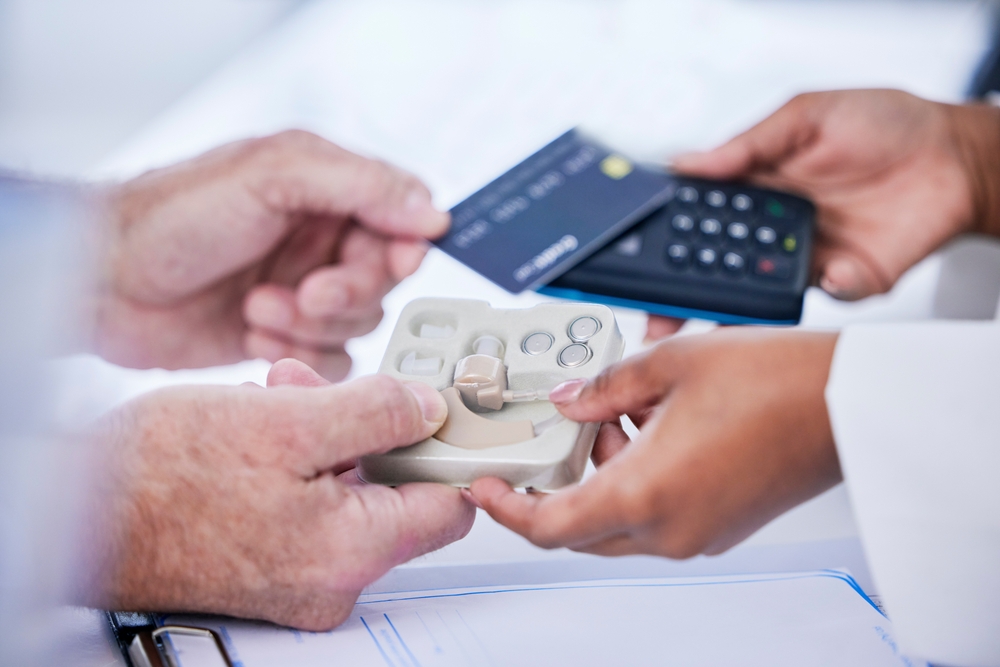
Patients researching therapeutic sound amplification often find that the initial acquisition expense stands out immediately. Varying by technological tiers and clinical customization requirements, modern systems require a wide range of financial commitments. This baseline cost frequently catches individuals off guard, occasionally stalling their journey toward improved communication.
While the financial baseline is significant, it does not represent the final out-of-pocket reality. It is a common misconception that the full list price must be borne entirely by the consumer. By leveraging private insurance benefits, tax-advantaged health funds, and structural payment programs, the net cost can be minimized.
This clinical brief outlines primary procurement strategies to educate you prior to your diagnostic evaluation, ensuring a confident approach to auditory rehabilitation.
Evaluating Third-Party Payer Coverage for Auditory Rehabilitation
Prior to resigning yourself to full private payment, a rigorous audit of your healthcare policy is required.
If you have private or employer-sponsored insurance, coverage for hearing aids can vary widely. Selected guidelines cover a predefined percentage of the hardware, while others issue a flat-rate allowance. On the other hand, some don’t include hearing aids at all. To clarify your position, review your summary of benefits or contact the carrier regarding otolaryngological provisions. You should explicitly confirm benefit renewal intervals, whether post-fitting care is covered, and contracted clinic networks.
It is a critical policy rule that standard Medicare Part A and Part B provide no financial support for hearing hardware. Conversely, privately administered Medicare Advantage options frequently offer hearing-specific stipends as a core incentive.
For those on Medicaid, coverage depends on where you live. Certain jurisdictions offer full or partial device funding for qualified applicants, which your clinic can help verify.
Maximizing Health Savings and Flexible Spending Accounts for Otologic Technology
Possessing an HSA or an FSA equips the patient with a highly efficient asset for absorbing device costs.
Because the IRS classifies hearing aids as a qualified medical expense, you can deploy pre-tax assets for their purchase. That alone can make a big difference. To illustrate, a patient in the 22% federal tax tier purchasing a $2,000 system reduces their real economic impact to approximately $1,560. Crucially, HSA balances carry over across fiscal periods, whereas FSA assets generally operate on a strict annual expiration schedule. Therefore, coordinating your audiology care with your annual FSA deadline ensures no assets are wasted! Both prescription and many over-the-counter hearing aids qualify, so it’s worth checking your balance before your appointment.
Structured Payment Plans and Credit Options for Modern Hearing Aids
Most established audiology centers provide entry points to dedicated consumer medical credit lines, eliminating the need for total upfront liquidation. These specific arrangements, often administered via platforms such as CareCredit, frequently feature promotional interest-free windows. This arrangement protects the patient from selecting sub-optimal technology merely to meet an immediate budget limit.
Financing is a normal part of the conversation. If you’re concerned about cost, mention it during your doctor’s visit. Recognize that these corporate and clinical credit options are deliberately positioned to bridge the affordability gap! No individual should be forced to endure financial instability or compromise their systemic well-being to treat an auditory deficit.
Navigating Veterans Administration (VA) Otology and Hearing Aid Benefits
With hearing deficits ranking as a primary consequence of military service, the VA delivers comprehensive support mechanisms for veterans.
Those with verified eligibility can obtain top-tier otologic hardware with no out-of-pocket exposure via the VA health network. Even if your documentation lacks an explicit acoustic connection, your broader VA medical tier might authorize these devices. If your military health benefits remain unutilized, coordinating with a local veteran service officer can streamline the application process.
Alternative Community-Based Grant and Aid Programs for Hearing Hardware
Independent philanthropic organizations and civic associations offer specialized avenues to mitigate the expense of hearing devices. Distinguished institutions, including the Starkey Hearing Foundation alongside local Lions Clubs, manage device donation programs. Furthermore, a number of municipal and state agencies sponsor dedicated initiatives for economically disadvantaged adults.
While these philanthropic avenues often mandate strict income verification and involve operational backlogs, they remain excellent resources. You can check online with most of these organizations to see if you qualify, or at least get the conversation started.
OTC Hearing Hardware: A Technical Assessment of Lower-Cost Auditory Options
Positioned as a budget-conscious retail category, OTC systems generally command a retail price from $200 to $1,000 per set. Such devices are clinically appropriate for mild or early-stage moderate presbycusis in self-directed adult users.
However, without a professional fitting, many people don’t get the results they’re hoping for. For moderate or more advanced hearing loss, prescription devices fitted by a hearing professional tend to deliver better outcomes.
Before selecting an unprescribed consumer device to save capital, obtaining a clinical hearing assessment ensures diagnostic accuracy. OTC hearing aids are usually a good option for someone waiting for their fitted hearing aid or for a response on whether they qualify for certain programs or benefits. They’re better than nothing and offer a decent temporary fix, but they’re not ideal for the long term.
A Collaborative Approach to Affordable Hearing Care and Device Selection
Our administrative staff is deeply experienced in aligning technological needs with realistic financial solutions for our community. Most individuals are pleasantly surprised by the diversity of available payment pathways once analyzed.
Provide your health insurance credentials at your intake visit, allowing us to audit your benefits and maximize your available financial credits. Call us to schedule your hearing evaluation online. We look forward to delivering the accurate answers and balanced payment options necessary to restore your connection to the world.