
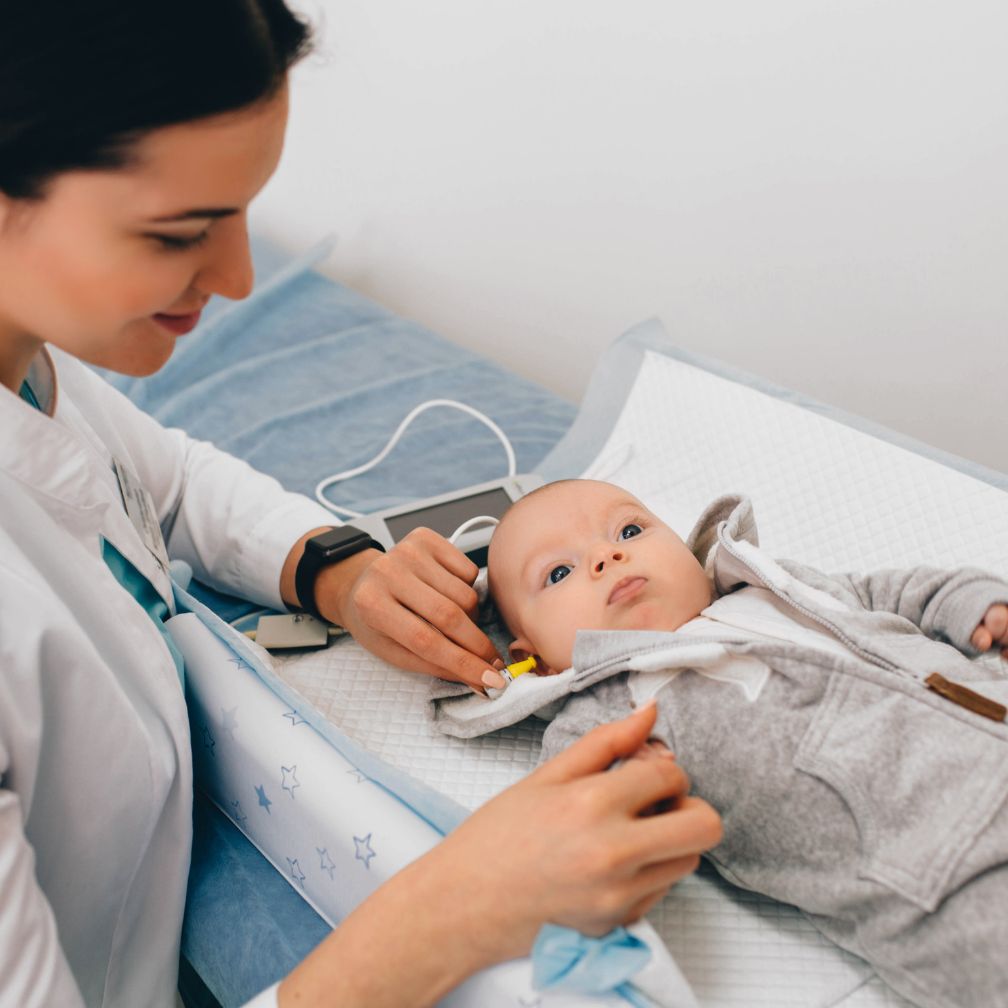
For new parents, learning that their baby shows hearing challenges remains extraordinarily shocking and painful. Yet the positive reality is: via timely identification and therapeutic support, children with hearing deficits are able to flourish remarkably. Indeed, these children can build language, communication skills, and strong connections with the world around them, paving the way toward a vibrant, rewarding life!
Utilizing individual hearing aids alongside surgical cochlear implants offers two exceptionally successful approaches for supporting infants with hearing loss. Throughout this resource, we examine their operational methods to assist you in choosing the optimum pathway for your infant.
Analyzing Infant Auditory Deficits
Auditory loss across infants routinely stems from a wide array of factors, including:
- Distinct genetic variations (even across lineages devoid of hearing loss history)
- Specific congenital infections including cytomegalovirus (CMV) or German measles
- Complex intrapartum events, including fetal oxygen deprivation or preterm emergence
- Specific pharmaceutical treatments deployed inside hospital neonatal units
What constitutes the single most vital measure? Timely diagnostic identification. This clinical standard explains why newborns throughout the United States receive hearing evaluations before departing the nursery. Pediatric audiology specialists consistently follow the standardized “1-3-6” operational timeline:
- Officially screened prior to 1 month of age
- Diagnosed within 3 months
- Medical intervention (incorporating corrective units or speech habilitation) established inside 180 days post-birth
Reaching these target timelines provides infants an exceptional path toward healthy speech, expressive language, and cognitive development. Should you seek further counsel surrounding screening protocols, your child’s pediatrician will gladly guide you!
Pediatric Hearing Aids for Young Babies
In infants identified with mild to severe auditory loss, modern hearing aids frequently serve as the primary clinical remedy. These compact, ear-level devices boost incoming speech signals, helping babies hear human speech and environmental sounds with far greater precision.
Dedicated pediatric-grade hearing devices represent:
- Highly safe for fitting on young babies only several weeks post-birth
- Designed with pliable, gentle custom molds that adapt as the baby matures
- Equipped with child-proof battery covers and dedicated pediatric safety elements
- Individually adjusted by a trained pediatric hearing practitioner to fit your infant’s precise diagnostic profile
While your infant develops, hearing devices require routine recalibration to maintain ideal ear-canal fit and acoustic output.
Cochlear Implant Options for Newborns
If an infant is diagnosed with severe to profound sensorineural hearing loss that fails to respond adequately to conventional hearing aids, a cochlear implant may be recommended. Differing fundamentally from conventional amplification tools, cochlear implant systems:
- Are positioned within the inner ear through a surgical process to restore sound perception directly
- Successfully bypass non-working components within the inner ear
- Process incoming audio into electrical signals that stimulate the auditory nerve directly
Cochlear implants are:
- Formally cleared by the FDA for young children aged 9 to 12 months and older
- Highly successful when combined with specialized rehabilitation and consistent family engagement
- Recommended exclusively following detailed multi-disciplinary testing by a pediatric audiologist and ENT surgeon
Such a comprehensive process requires neuroimaging scans, detailed hearing tests, and detailed consultations regarding anticipated long-term progress.
Hearing Aids or Cochlear Implants: Distinguishing Features
- Mild to severe hearing loss relies on Hearing Aids; Severe to profound hearing loss necessitates Cochlear Implants
- Non-Invasive external placement: Hearing Aids; Surgical internal implantation: Cochlear Implants
- Standard sound amplification logic: Hearing Aids; Direct electrical signal generation: Cochlear Implants
- Application starts during early infancy: Hearing Aids; Placement starts at 9-12 months: Cochlear Implants
Final Conclusions: Selecting the Right Path for Your Infant
If your newborn faces a confirmed hearing impairment diagnosis, you can rely on excellent technological options and dedicated expert support. With the help of pediatric hearing specialists, countless infants successfully cultivate language skills that are on par with their peers.
Whether your baby benefits most from custom hearing aids or a cochlear implant system, early intervention establishes a foundation for lifelong communicative success.
Do you need professional advice regarding your baby’s current hearing health? Reach out to us today for a full evaluation and personalized care plan.